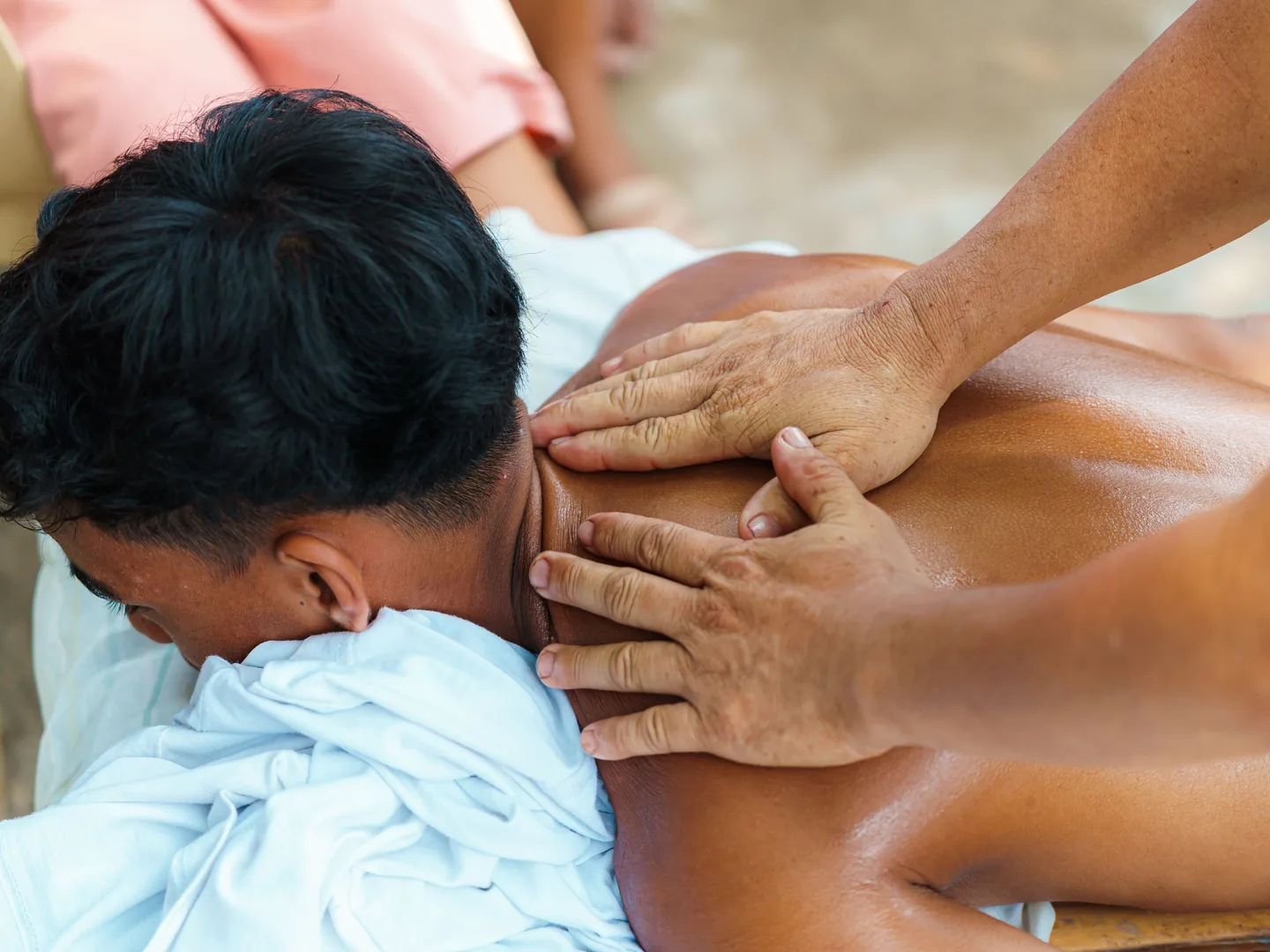
Tuina (pronounced twee-nah) is one of the oldest continuously practised forms of bodywork in the world, and it is the foundation of our signature treatment, Lotus Touch Therapy. If you have booked with us before and wondered why the massage felt different from every other massage you have had, this is why.
How does Tuina differ from a Swedish massage?
| Tuina | Swedish | |
|---|---|---|
| Technique | Sustained pressure on specific points, kneading, rolling, passive stretching | Long gliding strokes over whole muscle groups |
| Pressure | Medium to firm, held | Light to medium, flowing |
| Feels like | Deep, specific, occasionally intense — then a distinct release | Continuous, soothing, even |
| Oil | Little or none | Throughout |
| Best for | Specific tight areas, long-standing tension | General relaxation, switching off |
| Afterwards | Loose, sometimes a little worked-on next day | Relaxed, no after-effects |
What does Tuina feel like?
The most common description from our clients is “it found the exact spot”. Tuina works to points rather than across areas, so the pressure is concentrated. When the therapist finds a genuinely tight point, holding it can feel intense for a few seconds before the muscle gives — and that release is the part people book it for.
It should never be painful. Pressure is agreed at the start and checked throughout, and it can be dialled back at any moment. If you prefer something gentler, say so — our therapists adapt, and several of our clients specifically book Ke for her lighter work.
What are meridians?
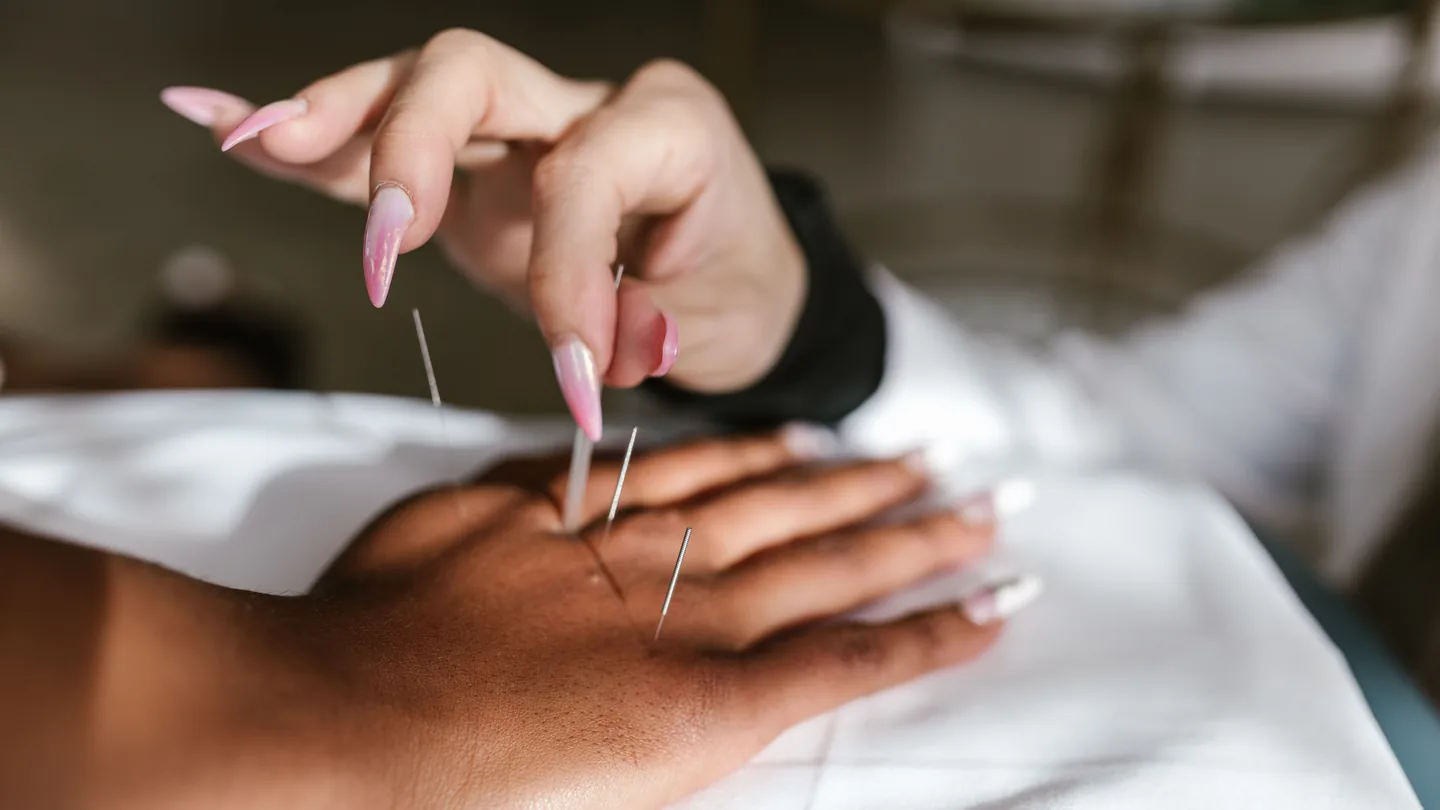
Meridians are the channels described in traditional Chinese medicine, along which practitioners work. They are the same map acupuncture uses. Tuina follows those lines with hands rather than needles.
We offer this treatment within the tradition it comes from, and we describe it in those terms. It is bodywork — please continue to follow your doctor’s advice on any health matter.
Common questions
Do I need to undress for Tuina?
Less than for an oil massage. Traditional Tuina is often performed through light clothing or a cloth. In practice we adapt to what you are comfortable with — tell us at the start.
Is Tuina painful?
It should not be. It can be intense at specific points for a few seconds, in the way that pressing a tight muscle is intense. Pressure is agreed before the session and adjusted whenever you ask.
How long should I book?
Thirty minutes is enough for one focused area, such as neck and shoulders. Sixty minutes covers the full back and shoulders properly. Ninety gives room for the whole body without rushing.
Will I be sore afterwards?
Sometimes, mildly, for about a day — similar to the feeling after a good workout. Drink plenty of water and take the rest of the day gently.