Cupping is one of the oldest techniques in traditional Chinese practice, and the one people recognise from the circular marks it leaves. It is the opposite of massage in a literal sense: rather than pressing down into the tissue, it lifts it.
What happens during a cupping session?
A typical 30-minute session
- Consultation Your therapist checks where you are holding tension and asks about bruising, medication, and skin conditions.
- Oil application The area — usually the back and shoulders — is oiled so the cups seal and can glide.
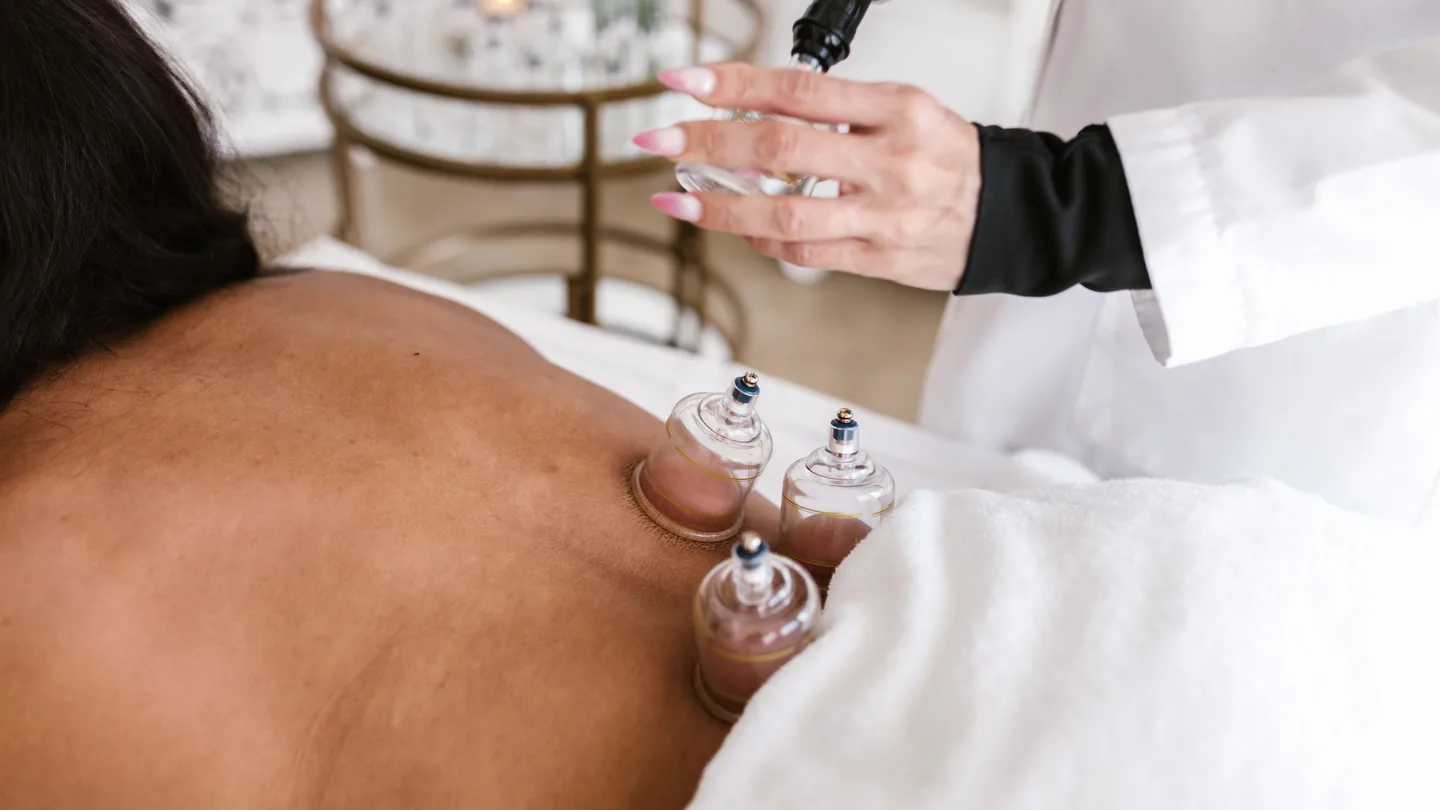
- Cup placement Cups are applied and suction created. You will feel a firm pulling sensation as the skin draws up into the cup.
- Static or gliding Cups are either left in place for five to fifteen minutes, or moved slowly across the muscle in gliding cupping.
- Removal and finish Cups are released, the area is wiped down, and your therapist talks you through what to expect over the next few days.
What do the marks mean?
Circular marks, ranging from light pink to deep purple, are the normal and expected result of the suction. They are not bruises caused by impact and they are generally not tender.
You will sometimes see claims that darker marks indicate a specific problem in the body. We would not make that claim. Mark intensity varies with suction strength, how long the cup stayed in place, and the individual — and not reliably with anything else.
Who should avoid cupping?
We do not perform cupping over broken skin, active eczema or psoriasis, or recent scar tissue, and we do not offer it during pregnancy. If you take blood thinners, bruise very easily, or have a bleeding disorder, please tell us before booking — in most cases we would suggest a different treatment.
Common questions
How long do cupping marks last?
Usually three to seven days. They fade from purple through to yellow-brown, much as a bruise does, and are generally not painful to touch.
Does cupping hurt?
It feels like a strong pulling or tightness rather than pain. Suction strength is adjustable — tell your therapist if it is too much.
Can I shower afterwards?
Yes, but keep the water warm rather than hot for the rest of the day, and avoid vigorous scrubbing over the cupped area.
Can cupping be added to a massage?
Yes. We offer it as a $25 add-on to any massage, which is how most of our clients try it first.